The Sweet Design Solution: Why Cookie Alphabet Captures Hearts and Markets
In the vast ocean of digital typography, finding a font that genuinely feels human can be a challenge. We are often bombarded with sleek, geometric sans-serifs or stiff, traditional serifs that, while functional, lack a certain spark of life. When a designer or business owner wants to convey warmth, comfort, and a homemade aesthetic, they need a typeface that looks like it was baked fresh this morning. Enter Cookie Alphabet, a cute rounded display font that does more than just spell words—it creates an atmosphere.
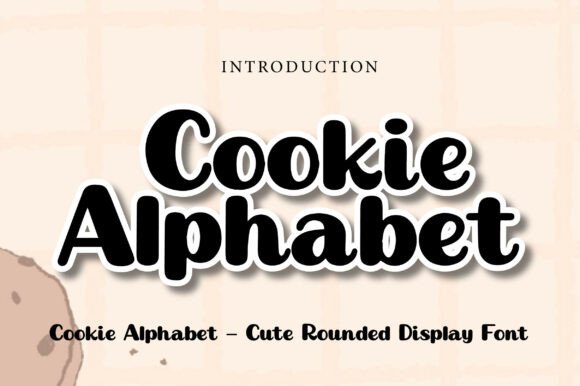
At its core, Cookie Alphabet is a celebration of softness. It features ultra-thick, soft-edged letterforms that immediately draw the eye. Unlike standard block letters, these characters have a heavy, satisfying weight that feels substantial on the page or screen. However, what truly sets this typeface apart is its irregularity. It blends hand-drawn proportions with that heavy weight, resulting in a rhythm that feels organic rather than mechanical. It is the typographic equivalent of a warm hug or a fresh batch of cookies cooling on a wire rack.
The Anatomy of a "Fresh-Baked" Typeface
Understanding why Cookie Alphabet works so well requires looking at its specific design characteristics. In typography, the "personality" of a font is dictated by its details. This particular typeface utilizes rounded terminals and soft corners. There are no sharp edges here. This visual softness translates psychologically to safety and friendliness.
Furthermore, the font embraces a "fresh-baked soul." This means it avoids the rigid uniformity of computer-generated text. If you look closely, you will notice that the proportions vary slightly from letter to letter. This is a deliberate design choice. It mimics the natural imperfections of handwriting or hand-painted signage. In an era where consumers are increasingly skeptical of faceless corporations, this human touch is invaluable. It tells the viewer that there is a real person behind the brand.
Visual Weight and Readability
One of the most practical benefits of Cookie Alphabet is its bold visual weight. In design, weight refers to the thickness of the strokes that make up a letter. Because this font is ultra-thick, it commands attention even at smaller sizes. This makes it an excellent choice for headlines and titles where you need to make an immediate impact.
However, because it is a display font, it is optimized for impact rather than long-form reading. You would not use Cookie Alphabet to write a novel, but you would absolutely use it to write the title of that novel. Its heavy weight ensures that text stands out against busy backgrounds, such as detailed illustrations or textured paper, which is common in artisanal packaging.
Real-World Applications: Where Cookie Alphabet Shines
The true test of a typeface is how it performs in the wild. Cookie Alphabet has a specific niche, but within that niche, it is incredibly versatile. Its "cozy aesthetic" makes it the premier choice for industries that rely on emotional connection and trust.
Artisanal Cookie Packaging and Bakeries
This is the most natural fit. The name itself suggests it, but the application is profound. When a customer picks up a box of cookies from a local bakery, they are buying an experience as much as a product. Using Cookie Alphabet on the label instantly communicates that the product inside is homemade, carefree, and delicious. It pairs beautifully with kraft paper textures and wax seals.
Children’s Book Titles and Nursery Branding
Children are naturally drawn to shapes that are soft and round. Sharp angles can feel aggressive, but the rounded letterforms of Cookie Alphabet feel safe and playful. For independent nursery branding, this font suggests a nurturing environment. For children’s book titles, it promises a story that is fun and engaging. It captures the innocence of childhood without being condescending.
Digital Presence and Social Media
In the fast-scrolling world of social media, specifically Instagram and Pinterest, aesthetic is everything. Home-cafés, lifestyle bloggers, and small business owners need headers and graphics that stop the scroll. Cookie Alphabet works exceptionally well for social media headers because its irregular, hand-drawn style stands out against the polished, often sterile look of modern UI design. It adds a layer of personality that stock fonts simply cannot replicate.
Integrating Cookie Alphabet into Modern Workflows
For designers, adopting a new font involves more than just liking how it looks; it involves technical considerations. Cookie Alphabet is designed to be user-friendly. It fits seamlessly into modern design workflows, whether you are using Adobe Illustrator, Photoshop, Canva, or Figma.
When working with this typeface, you will find that it pairs best with simple, clean sans-serifs. Because Cookie Alphabet is so expressive and detailed, placing it next to another decorative font can create visual clutter. Instead, use a neutral font like Helvetica or Open Sans for the body text, and let Cookie Alphabet do the heavy lifting for the headlines. This contrast creates a hierarchy that is pleasing to the eye and easy to read.
Color Pairings and Textures
Because the font radiates warmth, it naturally complements warm color palettes. Think terracotta, mustard yellows, soft pinks, and creamy whites. However, it also looks striking in monochrome—simple black on white paper can look incredibly chic and modern if the font itself has enough character.
Consider the medium. If you are printing on rough, textured stock, the soft edges of Cookie Alphabet will settle into the paper fibers, enhancing the tactile experience. On screen, adding a subtle drop shadow or a slight texture overlay can enhance its "hand-made" qualities, making it feel less like a digital file and more like a physical object.
Practical Considerations Before Choosing
While Cookie Alphabet is a powerful tool, it is not a universal solution for every design problem. It is essential to consider the context of your project before committing to this typeface.
- Brand Alignment: Does your brand identity rely on authority and seriousness? If you are designing for a law firm, a bank, or a luxury tech brand, the playful nature of Cookie Alphabet might undermine your credibility. It is best suited for brands that want to be perceived as approachable, friendly, and creative.
- Scale and Legibility: While it is bold, the irregularity of the letterforms means it can become difficult to read if used too small. Always test your designs at the intended viewing distance. It is a display font, so keep it large and proud.
- Overuse: Because the font is so distinctive, using it for every single piece of text can be overwhelming. It is best used as an accent—a headline, a logo, or a call-to-action button. Let it be the "cherry on top" of your design rather than the whole sundae.
The Emotional ROI of Friendly Typography
In marketing and design, we often talk about Return on Investment (ROI) in terms of numbers. However, typography offers an emotional ROI. When you use Cookie Alphabet, you are investing in how your audience feels.
Fonts trigger associations. We associate rounded, heavy letters with food, comfort, and childhood. By leveraging these associations, you bypass the viewer's logical brain and appeal directly to their emotions. This is why a bakery logo using Cookie Alphabet can make someone feel hungry before they even see a picture of a cake. It is a subtle psychological cue that enhances the user experience.
Ultimately, Cookie Alphabet is more than just a collection of glyphs; it is a mood. It is the design equivalent of a rainy Sunday afternoon with a good book and a warm drink. For designers and business owners looking to inject a sense of artisanal quality, comfort, and human connection into their work, this typeface is an indispensable asset. It satisfies the craving for sweet design, proving that sometimes, the best way to connect with people is to offer them something that feels like home.