Keyclack: Evaluating a Vintage Typewriter Font for Modern Design
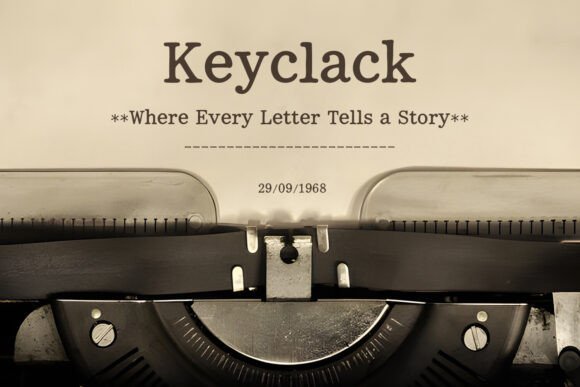
In the vast landscape of digital typography, selecting a font that conveys a specific mood or era is a critical design decision. Keyclack is a typeface designed to emulate the aesthetic of mid-20th century typewriters. It is not merely a collection of letters but an attempt to capture the tangible qualities of mechanical typing—the bold serifs, the monospaced alignment, and the subtle imperfections of ink on paper. For designers and creators, evaluating a font like Keyclack involves understanding its inherent character, its practical applications, and where its strengths and limitations lie within a project's goals.
Understanding the Core Aesthetic and Technical Structure
At its heart, Keyclack is a monospaced font. This means every character, from the widest "W" to the narrowest "i," occupies the same horizontal width. This technical constraint is fundamental to its authenticity, directly mirroring the mechanics of a typewriter's carriage. The visual result is a distinct, grid-like rhythm that can evoke feelings of order, nostalgia, or raw functionality. Its design features bold serifs—the small strokes at the ends of letters—which are characteristic of typewriter impressions that required force to transfer ink onto a ribbon and then onto paper. Furthermore, Keyclack often incorporates a slightly distressed ink texture. This is not a flaw but a deliberate design choice to simulate the uneven ink distribution and occasional wear of vintage typebars, adding a layer of tactile, organic quality absent in clean, modern sans-serifs.
Scenarios Where Keyclack is a Strong Fit
The decision to use Keyclack should be driven by the project's narrative and functional requirements. It excels in contexts where a sense of history, authenticity, or mechanical precision is desired.
- Editorial and Publishing Design: For book titles, chapter headings, or pull quotes in genres like mystery, historical fiction, or personal memoir, Keyclack can immediately establish a tone. It suggests a story that has been "typed out," perhaps by a detective, a journalist, or a character from the past.
- Branding and Identity: Businesses or products aiming for a vintage, artisanal, or workshop vibe can benefit from its character. Think of a craft brewery, a bespoke tailor, an independent bookstore, or a podcast about history. The font communicates a hands-on, detail-oriented ethos.
- Poster and Title Design: Its high-contrast and textured appearance make it impactful at large sizes. It is well-suited for event posters, album covers, or movie titles that want to channel a retro or analog feel.
- Thematic Digital Projects: For websites or apps with a specific narrative—like an interactive story, a history archive, or a vintage-themed game—Keyclack can be used for headers or UI elements to deepen the immersive experience.
Key Benefits and Practical Tradeoffs
Choosing Keyclack comes with clear advantages and important considerations. Its primary benefit is instant evocation of a specific era and medium. It carries a built-in narrative that can save a designer from needing excessive supporting graphics to establish a mood. The monospaced structure also ensures a clean, aligned layout for certain types of information, which can be aesthetically pleasing for code snippets or stylized lists.
However, these same features present tradeoffs. The monospaced structure, while authentic, is less space-efficient than proportional fonts. This can lead to wider text blocks and may not be ideal for body copy where readability and compactness are priorities. The distressed texture, while adding character, can reduce legibility at very small sizes or on low-resolution screens. Therefore, Keyclack is generally more effective for display purposes—headlines, logos, short phrases—rather than for long-form reading. Its strong stylistic presence also means it can overwhelm a design if overused; it often works best as an accent paired with a more neutral, complementary typeface for body text.
Considering Alternatives and Making a Decision
If the project's goal shifts slightly, other fonts may be more appropriate. For a clean, technical monospaced look without the vintage distress, a font like Courier New or a modern monospace such as Roboto Mono might be better. If the desired aesthetic is more "retro" than specifically "typewriter," a slab serif with a 1970s feel could be explored. The key is to ask: Is the typewriter metaphor central to my message, or is it just a stylistic preference that might conflict with clarity?
When evaluating Keyclack for a project, conduct a practical test. Set your key headlines and subheads in the font. Examine it at the intended size and on the target medium (e.g., a printed poster versus a mobile screen). Does the texture become muddy? Does the monospace alignment help or hinder the layout? Pair it with potential body fonts to see if the contrast is harmonious or jarring. This hands-on evaluation is more telling than simply admiring the font in isolation.
Aligning Keyclack with Your Project Goals
Ultimately, Keyclack is a specialized tool in a designer's toolkit. It is not a universal solution but a powerful one for the right context. It aligns well with projects that value narrative, nostalgia, and mechanical authenticity. It is less suited for projects demanding minimalist modernism, high-density information display, or maximum legibility across all conditions.
By considering the specific needs of your audience and the story your design intends to tell, you can determine if the authentic, textured character of Keyclack serves your goals. Its value lies in its ability to add a layer of tangible history and personality, transforming simple text into a designed element with its own voice and era.