Why the Shine Typewriter Font is Your Secret Weapon for Authentic Retro Design
There is a distinct feeling you get when you look at a design that truly resonates. Sometimes it is the color palette that grabs you, but often, it is the typography. In a digital landscape saturated with sleek sans-serifs and predictable serifs, there is a growing hunger for texture, grit, and authenticity. We want our designs to feel human, lived-in, and a little imperfect. This is exactly where the magic of typewriter fonts comes into play, and specifically, why the Shine Typewriter has become such a standout asset for creatives.
Typewriter fonts are not just about looking old. They are about conveying a specific mood. They whisper of secret agents, midnight journalism, cold case files, and love letters written from a distance. However, finding a typewriter font that feels genuinely handmade rather than digitally manufactured can be a challenge. Many options look too clean, too vector-perfect, losing the very soul that makes analog type so charming. Shine Typewriter bridges that gap beautifully, offering a funky, creative, and thematic aesthetic that manages to feel both retro and incredibly fresh.
The Aesthetic of Imperfection
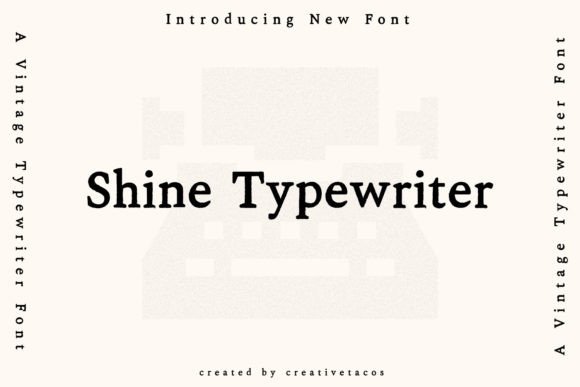
What makes a font feel "handmade"? It is the irregularity. When you look closely at the Shine Typewriter, you will notice the subtle variations in ink density and the slight misalignment of the baseline. This is not a glitch; it is a feature. It mimics the mechanical action of a vintage typewriter striking paper, where the "e" might be a bit lighter than the "t," or where a period might leave a deeper impression.
This aesthetic of imperfection is crucial for modern design. We have moved past the era where "professional" meant "flawless." Today, professional often means "authentic." By using a font like Shine Typewriter, you instantly inject personality into your work. It tells the viewer that a human being is behind the message, which helps build trust and emotional connection. Whether you are designing a wedding invitation that needs a touch of vintage romance or a band poster that needs some gritty edge, this font provides that foundation without requiring you to manually distress the text.
Diving into the Forensic and Detective Vibe
One of the most compelling use cases for this particular typeface is the forensic style. Think about the visual language of crime dramas, mystery novels, and evidence boards. It is a world dominated by manila folders, red string, and typewritten reports. The Shine Typewriter captures this vibe perfectly.
It has a certain weight to it that suggests official documentation. If you are working on a project that involves storytelling—perhaps a true crime podcast cover, a game interface, or a screenplay presentation—this font adds immediate gravitas. It looks like it belongs on a classified document. This is incredibly useful for:
- Book Covers: Especially for the mystery, thriller, or noir genres. The Shine Typewriter sets the tone before the reader even reads the title.
- Event Invitations: Murder mystery dinner parties or escape room marketing materials benefit hugely from this aesthetic.
- Editorial Design: Using it for pull quotes in a magazine layout can break up the monotony of standard body text and draw the eye to key statements.
The font does not just look like a typewriter; it feels like evidence. It grounds your digital project in a tangible, physical reality that is hard to ignore.
Modern Workflows and Versatility
It is easy to pigeonhole a thematic font like Shine Typewriter into purely retro projects. However, its utility extends far beyond vintage recreations. In fact, it is a powerhouse in modern minimalist design. When used correctly, a decorative font can serve as a striking counterpoint to clean, modern elements.
Imagine a sleek, modern website with plenty of white space, using a standard geometric sans-serif for the body copy. Now, imagine the headers are set in Shine Typewriter. The contrast is immediate and arresting. The texture of the typewriter font pops against the clean digital backdrop, creating a focal point that guides the user's eye. This is a common technique in "anti-design" and brutalist web design trends, where mixing raw, analog textures with high-tech layouts creates a unique user experience.
Pairing Strategies
To get the most out of Shine Typewriter, you need to pair it wisely. Because it has a strong personality, it can easily overwhelm a design if overused. It works best as a display font for headlines, titles, or short bursts of text.
For body copy, you need something that is highly legible and neutral. A clean sans-serif like Helvetica, Arial, or Roboto creates a safe harbor for the eyes, allowing the Shine Typewriter to shine (pun intended) in the headlines. Alternatively, pairing it with a classic serif font like Garamond can lean into the vintage aesthetic, creating a look that feels like a high-end literary journal.
Consider the hierarchy of your information. Use the typewriter font for the "hook"—the emotional grab. Use your secondary font for the "info"—the details. This balance ensures your design is both stylish and functional.
Practical Considerations for Designers
When you integrate a new font into your library, you have to consider how it behaves in different environments. One of the strengths of Shine Typewriter is its legibility at various sizes. Some distressed fonts fall apart when scaled down, becoming muddy blobs. This typeface, however, maintains its character even when used in smaller sub-headers or button text, thanks to its thoughtful construction.
Another factor is color. Typewriter fonts generally love high contrast. Black text on a cream or off-white background mimics the look of old paper and ink. However, don't be afraid to experiment with color. A bright neon pink Shine Typewriter on a dark background creates a synth-wave, 80s aesthetic that is currently very popular in music and fashion branding.
Scenarios for Application
Let’s look at a few specific scenarios where this font elevates the work:
- Branding for Artisanal Products: If you are branding a coffee roastery, a craft brewery, or a handmade leather goods store, the Shine Typewriter communicates "handcrafted" and "small batch." It suggests that care was taken in the creation of the product.
- Social Media Graphics: In the fast-scrolling world of Instagram or TikTok, you have a split second to grab attention. A bold typewriter headline cuts through the noise. It feels raw and unpolished in a way that encourages people to stop and read.
- Portfolio Presentation: For photographers or artists, using Shine Typewriter for annotations or descriptions on your portfolio site can add a layer of artistic flair that standard text lacks. It frames your work as a curated gallery rather than just a collection of files.
The "Funky" Factor
We often describe fonts as elegant, serious, or playful. The descriptor "funky" is less common, but it perfectly suits Shine Typewriter. There is a looseness to it. It is not rigid or stuffy. This makes it an excellent choice for creative industries, music festivals, or youth-oriented brands.
It captures a sense of rebellion. The typewriter was once the tool of the journalist exposing the truth or the poet breaking the rules. By using this font, you tap into that legacy of creative independence. It is perfect for flyers, zines, and album art where the goal is to express a distinct, perhaps counter-culture, point of view.
Why It Belongs in Your Library
Every designer has a "toolkit" of fonts they rely on. We all have our favorite sans-serif and our go-to serif. However, the gap in many toolkits is a reliable, high-quality display font that adds texture. Many designers resort to overlaying grunge textures on clean fonts to achieve this effect, which takes time and can be messy.
Having Shine Typewriter ready to go streamlines your workflow. You do not need to add extra effects; the texture is built right into the letterforms. It is an incredible asset because of its versatility. It is not a one-trick pony limited to a single style. It can be serious and forensic, or it can be funky and retro, depending on the context you provide.
When you are choosing a font like this, look at the details. Look at the punctuation marks. In Shine Typewriter, the brackets, asterisks, and periods often have as much personality as the letters themselves. These details are what separate amateur designs from professional ones. When you use a colon or a dash, it should look like it belongs to the same family as the letters, and this font delivers on that promise.
Ultimately, choosing a font is about choosing a voice. The Shine Typewriter offers a voice that is confident, textured, and versatile. It speaks of history and creativity simultaneously. Whether you are solving a visual mystery or just trying to make a flyer stand out on a telephone pole, this font is the tool that will help you get there. It is more than just a set of characters; it is a mood setter, a story starter, and a design essential.