Mood Font: The Bold, Modern Typeface for Impactful Design
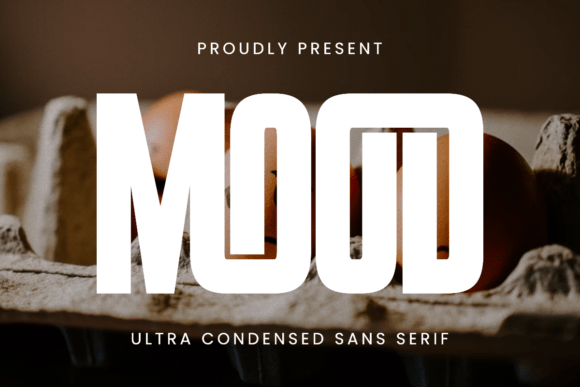
In the vast landscape of typography, few typefaces capture attention with the immediacy and confidence of a well-crafted sans serif. Among contemporary options, Mood stands out as an ultra-condensed sans serif font engineered for projects that demand visual authority. Its design philosophy centers on creating an immediate emotional and aesthetic response—hence the name—making it a powerful tool for designers, brands, and creators seeking to establish a strong, memorable identity.
Understanding the Core Anatomy of Mood
Mood's distinctive character stems from several deliberate design choices. Its tall proportions are its most defining feature, allowing designers to create impactful headlines without consuming excessive horizontal space. This verticality commands attention in layouts, drawing the viewer's eye directly to the message. Unlike many condensed fonts that sacrifice readability for density, Mood maintains a clean yet expressive letter construction. Each glyph is crafted with a modern sensibility, balancing geometric precision with subtle humanist touches that prevent it from feeling sterile.
The font's bold personality is not merely about weight; it's about presence. The strokes are confident, the counters (the enclosed spaces within letters like 'o' and 'a') are carefully shaped to maintain clarity even at smaller sizes or when viewed from a distance. This careful balance ensures that while Mood is designed for impact, it does not compromise on fundamental legibility—a critical consideration for any professional typeface.
The Power of Ultra-Condensed Design
Condensed typefaces solve a specific design challenge: how to fit more words into a fixed space without shrinking the font size. Mood elevates this utility into an aesthetic advantage. Its ultra-condensed nature allows for dynamic typographic hierarchies. A designer can set a subheading in a standard weight of a complementary font and use Mood for the main title, creating a dramatic contrast that guides the viewer through the content structure effortlessly.
This characteristic is particularly valuable in responsive web design and multi-format branding. A headline set in Mood can remain visually dominant on a desktop banner, a mobile screen, or a printed poster, adapting its impact to the medium while conserving valuable real estate.
Practical Applications: Where Mood Excels
The versatility of Mood lies in its ability to inject a contemporary edge into diverse creative fields. Its design is not tied to a single aesthetic, making it a adaptable asset across industries.
- Fashion & Editorial Design: The font's tall, elegant lines resonate with the high-fashion world. It is perfectly suited for magazine headlines, lookbook titles, and e-commerce banners where conveying sophistication and modernity is paramount. The clean lines complement high-impact photography without competing with it.
- Music & Entertainment: From album covers and festival posters to streaming service graphics, Mood's bold presence captures the energy and intensity of the music industry. Its distinctiveness helps artists and labels create packaging and promotional materials that stand out in a crowded market.
- Sports & Active Lifestyles: The dynamic, forward-leaning quality inherent in many condensed fonts, including Mood, evokes motion and energy. This makes it an excellent choice for team branding, event signage, and athletic apparel graphics where a sense of power and action is desired.
- Advertising & Packaging: In advertising, first impressions are measured in milliseconds. Mood's instant impact makes it ideal for billboards, digital ads, and product packaging. On a shelf, a product name set in Mood can be the deciding factor that draws a consumer's attention.
Technical Excellence: Beyond the Glyphs
A typeface's professional utility is often determined by its technical features. Mood is designed with the modern creative workflow in mind, incorporating essential functionality that streamlines the design process.
One of its most significant technical attributes is being PUA-encoded (Private Use Area encoded). For the end-user, this translates to effortless access to all glyphs, swashes, and alternate characters. In practical terms, this means that within design software like Adobe Illustrator, Photoshop, or InDesign, a designer can easily access stylistic alternates, ligatures, and decorative elements without needing advanced OpenType feature knowledge or resorting to cumbersome workarounds.
This accessibility empowers customization. A logo designer, for instance, can quickly swap a standard 'R' for one with a distinctive tail, or add a swash to a capital letter to create a unique wordmark. This level of control is crucial for developing truly bespoke typography for branding projects, ensuring the final result is not just set in a popular font, but is uniquely tailored to the client's identity.
Strategic Considerations for Using Mood
While Mood is a powerful tool, its effectiveness is maximized through strategic application. Understanding its strengths and ideal contexts ensures it enhances rather than overwhelms a design.
- Pairing with Simplicity: Mood's bold personality calls for a complementary, quieter partner. Pair it with a simple, neutral sans serif (like a light weight of Helvetica, Arial, or a humanist sans) or a classic serif for body text. This contrast creates visual harmony and ensures the headline remains the focal point without causing visual fatigue.
- Hierarchy and Scale: Use Mood primarily for headlines, titles, and short, impactful statements. Its condensed form makes it less suitable for long paragraphs of body copy, where readability over extended reading is the priority. Leverage its height to create clear, commanding visual hierarchies.
- Whitespace is an Ally: Because Mood is visually dense, it benefits from generous surrounding whitespace. Ample padding around text set in Mood prevents the design from feeling cramped and allows its unique letterforms to breathe and be appreciated fully.
- Context is Key: Consider the emotional tone of your project. Mood's modern, bold aesthetic aligns well with innovation, confidence, and energy. For projects requiring a traditional, gentle, or highly formal tone, it may not be the most appropriate choice. Its strength lies in making a contemporary statement.
The Evolution of Display Typography and Mood's Place Within It
The history of typography is a cycle of trends and revivals, with display type often leading the charge in visual culture. The current digital era, saturated with content, has amplified the need for typefaces that can cut through the noise. This has led to a resurgence of interest in highly stylized, character-rich display fonts that offer more than just basic communication.
Mood fits squarely within this trend. It is not a revival of a historical typeface but a product of its time, designed for the screens and print demands of the 21st century. Its design reflects a preference for clarity and impact at speed, catering to the shortened attention spans of digital audiences while providing the gravitas needed for physical applications.
For the business owner, selecting a typeface like Mood for branding is a strategic decision. It communicates a brand personality that is modern, confident, and unafraid to stand out. For the educator or researcher, it serves as an excellent case study in how typographic form influences perception and communication. For the hobbyist creator, it unlocks a level of professional polish that can elevate personal projects, from social media graphics to personal portfolios.
Ultimately, Mood is more than just a collection of letters and numbers. It is a design instrument built for a specific purpose: to create immediate, lasting visual impressions. Its combination of aesthetic boldness, technical sophistication, and versatile application makes it a valuable asset in the toolkit of anyone involved in visual communication, from seasoned professionals to aspiring creators looking to make their mark with confidence and style.