Riot Smear: Integrating Brutalist Typography into Professional Design Workflows
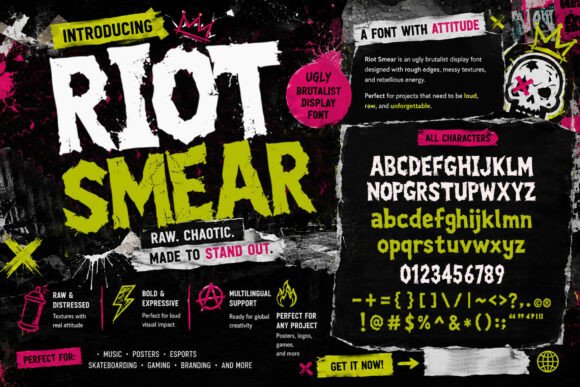
In the current landscape of digital design, where vector-perfect, polished aesthetics often dominate the interface, there is a distinct and growing necessity for assets that convey raw authenticity. Riot Smear addresses this need directly. It is a bold, ugly brutalist display font characterized by rough handmade textures, chaotic cuts, and raw urban energy. Unlike typefaces designed for legibility in body copy, Riot Smear is engineered to stand out with an imperfect, rebellious aesthetic. For professionals ranging from brand strategists to event organizers, understanding how to categorize and deploy this specific font style is crucial for effective visual communication.
Defining the Aesthetic: What is Brutalist Typography?
Before integrating Riot Smear into a project, it is necessary to understand its design philosophy. Brutalism in design rejects the polished veneer of modern corporate aesthetics. It embraces the "do-it-yourself" ethos of punk zines and street art. Riot Smear fits squarely into this category. Its letterforms are not mathematically aligned; they simulate the imperfection of hand-painted signage or photocopied flyers. This texture creates an immediate emotional response—urgency, rebellion, and high energy.
For a designer or creator, this defines the font's role. It is not a tool for conveying neutral information. It is a tool for making a statement. When planning a visual hierarchy, Riot Smear should be reserved for elements that require maximum visual friction. If a design needs to feel safe, corporate, or calm, this font is the wrong choice. However, if the goal is to disrupt the viewer's scrolling pattern and demand attention, it is the primary asset for the task.
Strategic Placement in the Creative Process
Integrating a specialized asset like Riot Smear requires forethought. It should not be an afterthought applied to a finished layout. Instead, it should be a foundational decision made during the planning and concepting phase of a workflow.
Pre-Production and Concepting
When moodboarding a project, the inclusion of brutalist typography signals a specific creative direction. If you are a freelancer pitching a branding package to a skate culture brand or an underground music venue, introducing Riot Smear in the initial moodboard sets the expectation for a gritty, high-contrast visual language. This saves time later by aligning the client’s expectations with the raw nature of the deliverables early on.
Asset Selection and Compatibility
During the execution phase, compatibility is key. Riot Smear functions best when contrasted against cleaner elements. A common workflow error is pairing a chaotic display font with other distressed or script fonts, resulting in visual noise that lacks hierarchy. To maximize usability, pair Riot Smear with a clean, geometric sans-serif for secondary information. This interaction allows the display font to capture the chaotic energy while the supporting typeface ensures the message remains accessible.
Practical Application Across Industries
The versatility of Riot Smear lies in its ability to adapt to various professional outputs. While its roots are in street culture, its application extends to any project requiring high impact.
Event Promotion and Music Industry
For marketers promoting concerts, festivals, or club nights, the workflow often involves creating assets that must compete in visually saturated environments. Using Riot Smear for headliner names or event titles on posters creates immediate recognition. In a digital context, such as Instagram stories or web banners, the textured cuts of the font mimic the aesthetic of screen printing, adding a tactile quality to digital media. This is particularly effective for genres like punk, metal, or industrial techno, where the visual identity is intrinsically linked to the sound.
Esports and Gaming Visuals
In the esports sector, team branding relies heavily on conveying aggression and dominance. Riot Smear offers a solution for team logos, stream overlays, and merchandise. When implementing this font in gaming visuals, it is important to consider the rendering on low-resolution screens. The "rough" edges of the font can sometimes pixelate poorly on small mobile screens. Therefore, quality control involves testing the font at various scales to ensure the "intentional roughness" does not become "accidental blur."
Skate Culture and Apparel
For apparel designers and small business owners in the skate industry, the aesthetic of the product is often the selling point. Riot Smear can be used to create graphics for t-shirts, decks, and stickers. The workflow here involves vectorizing the font or outlining it to apply custom textures or distress effects, further integrating it into the fabric of the garment design. It serves as a bridge between typography and illustration.
Workflow Integration and Technical Execution
To use Riot Smear effectively, one must manage it like any other high-impact resource. It requires specific technical considerations to ensure it enhances rather than hinders the project.
Hierarchy and Legibility
The primary function of Riot Smear is as a display typeface. It is designed for headlines, logos, and short, punchy statements. It should rarely, if ever, be used for body copy or long-form text. In a layout workflow, establish a strict rule: use Riot Smear for the top tier of the hierarchy only. This maintains the raw energy of the font without sacrificing the readability of the core message.
Color and Contrast
Because the font features chaotic cuts and textures, it interacts uniquely with color. High-contrast color palettes—such as black and white, or neon against dark backgrounds—amplify the brutalist effect. When applying the font, avoid subtle gradients or low-contrast backgrounds, as these can muddy the intricate details of the rough textures. The implementation strategy should prioritize stark separation between the text and the background to let the "ugly" beauty of the typeface shine.
File Preparation and Organization
For long-term use, organize your font library by project type. Since Riot Smear is highly stylized, it is not a general-purpose tool. Tagging it in your asset management system under "Display," "Grunge," or "Experimental" ensures you can locate it quickly when a project calls for that specific rebellious energy, rather than wasting time searching through standard corporate typefaces.
Long-Term Use and Brand Consistency
For entrepreneurs and creators building a brand identity, consistency is paramount. If Riot Smear is chosen as the primary typeface for a brand, it commits that brand to a specific persona. This is a strategic decision that influences all future marketing materials, from website headers to email signatures.
However, it is important to note that trends in design shift. While brutalism is currently popular, a font this distinct can feel dated if not used thoughtfully. To mitigate this risk, use Riot Smear as a secondary accent font for a more established brand, or reserve it for specific campaigns (like a limited edition drop) rather than the permanent logo. This allows for flexibility and keeps the brand identity feeling fresh while still utilizing the font's high-energy capabilities when appropriate.
Conclusion: Embracing the Imperfect
Riot Smear is more than just a collection of letters; it is a statement of intent. It fits into a workflow as a tool for disruption, designed to cut through the noise of polished, generic design. By understanding its technical limitations and aesthetic strengths, professionals can use it to create visuals that resonate with authenticity. Whether for a music poster, a gaming overlay, or a streetwear brand, the successful implementation of this font lies in embracing its imperfections and using them to create a powerful, unforgettable visual impact.