Machine 1942: Integrating Vintage Typewriter Authenticity into Modern Design Workflows
In the current digital landscape, the visual noise is overwhelming. Every brand, freelancer, and content creator is vying for attention, often relying on the same set of modern, sterile sans-serif fonts. To break through this uniformity, designers are increasingly turning toward tactile, historical aesthetics. Machine 1942 is not merely a typeface; it is a functional tool for creating immediate visual texture. As a vintage-inspired typewriter font, it captures the mechanical imperfections of the mid-20th century, offering a rugged, nostalgic feel that modern vector text cannot replicate.
However, integrating a distressed, grunge-style font into a professional workflow requires more than just a drag-and-drop action. It requires an understanding of file preparation, color interaction, and structural hierarchy. This article explores the practical application of Machine 1942, detailing how creators, marketers, and business owners can implement this asset to enhance visual storytelling without sacrificing readability or professional standards.
The Utility of Mechanical Imperfection
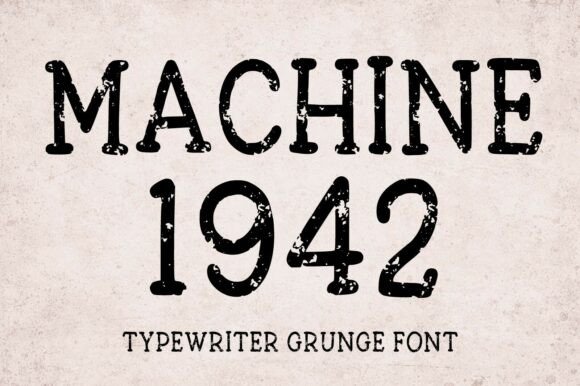
The primary value of Machine 1942 lies in its ability to simulate history. The font features classic serif letterforms paired with distressed textures that mimic the uneven ink distribution of old mechanical typewriters. This is distinct from a clean digital font that has simply been "roughened" in post-production. The character spacing (kerning) and baseline shifts in a typewriter font are intentionally irregular, creating a rhythm that feels human and manual.
For designers, this solves a specific problem: the "plastic" look. When a poster, book cover, or social media graphic feels too digital or cold, the project lacks emotional weight. By swapping a standard header font for Machine 1942, you instantly inject a layer of authenticity. It signals to the viewer that the content has a story, a history, or a "gritty" reality, making it ideal for projects that require an emotional connection rather than just data transmission.
Strategic Application in Project Phases
Understanding when to apply this font is as crucial as knowing how. In a standard creative workflow, typography selection is a decision that should be made during the planning and concept phase, not the final polishing stage.
If you are working on a branding project for a craft brewery, a vintage clothing line, or a hard-boiled detective novel, the typewriter aesthetic should dictate the layout structure. Because Machine 1942 has a distinct visual weight and texture, it requires ample negative space. If you attempt to fit this font into a dense, information-heavy data sheet, the distressed edges will merge, creating visual clutter. Therefore, implementation begins with layout planning: allocating wide margins and clean backgrounds that allow the font’s mechanical texture to breathe.
Workflow Integration and Tool Compatibility
Machine 1942 functions as a standard font file (typically OTF or TTF), making it compatible with the entire Adobe Creative Suite, Canva, Procreate, and standard office software. However, because it is a "grunge" font, it interacts differently with various design elements than a clean typeface would.
Layering and Texture Management
When using Machine 1942 in software like Photoshop or Illustrator, the font acts as a texture in itself. A common mistake is to apply additional grain or noise effects over the text. This leads to "visual mud." The font already contains the necessary distressing; adding more texture obscures the letterforms and hurts legibility.
Instead, focus on contrast. Pair Machine 1942 with a clean, modern sans-serif font for body copy. This contrast is essential for hierarchy. The typewriter font draws the eye and establishes the mood for headlines, while the clean font ensures the message is communicated clearly in the body text. This pairing creates a balanced workflow where style supports, rather than hinders, communication.
Color and Background Considerations
The "ink" of Machine 1942 is not uniform. To maintain the authentic look of a historical document, avoid placing this font on backgrounds with high-contrast, complex patterns (like a busy floral wallpaper or a neon gradient). The irregular edges of the letters will vibrate against the background, causing eye strain.
The most effective implementation involves solid, muted, or textured backgrounds that mimic paper. Think kraft paper beige, slate grey, or off-white. When using this font on images, ensure the image has been desaturated or darkened in the area behind the text to create a "safe zone" for the typography.
Practical Implementation: Use Cases and Examples
To maximize the return on this design asset, consider these specific workflows where Machine 1942 excels.
1. Editorial and Publishing
For bloggers, authors, and publishers, the typewriter aesthetic is a staple of the mystery, thriller, and historical fiction genres. However, overuse can make a design look cliché. Use Machine 1942 for the main title and the author's name on a book cover. For the chapter headings inside the book, use a standard serif or sans-serif to ensure readability. This workflow balances the genre expectation on the shelf with the functional requirement of the reading experience.
2. Marketing and Branding Assets
Small business owners often struggle to create marketing materials that look "authentic" rather than "template-made." Using Machine 1942 on flyers, packaging, or Instagram stories can bridge that gap. It works exceptionally well for "limited time" offers or "coming soon" announcements, as the typewriter font implies urgency and a "hot off the press" mentality.
Workflow Tip: Create a template library. If you use Machine 1942 for your social media headers, save a master file with the text already set in a specific color (e.g., dark charcoal, not pure black) that mimics dried ink. This ensures brand consistency across all future assets.
3. Web Design and UI
While long-form text on websites should rarely use a typewriter font due to screen resolution and legibility issues, Machine 1942 is excellent for specific UI elements. Use it for "404 Error" pages, pull quotes, or hero section headers on portfolio sites for photographers and artists. It adds a tactile quality to the screen, making the digital experience feel more grounded.
Quality Control and Long-Term Usability
When integrating Machine 1942 into a long-term project or brand identity, quality control is paramount. Because the font is distressed, it can behave differently at various scales.
Size Testing: Always test the font at the size it will be viewed. At very small sizes (under 12pt), the distressed details may disappear or clog, turning the text into a blurry mess. At very large sizes (billboards), the pixelation of the distressing might become apparent if the file format is not vector-based. Ensure your software is rendering the font as vectors, not rasterized images, to maintain crispness regardless of scale.
Accessibility: As a creator or business owner, you must consider accessibility. High-distress fonts can be difficult for users with visual impairments to read. When using Machine 1942 on the web, ensure that the contrast ratio meets WCAG guidelines. While the font is stylistic, the message must remain accessible to all users.
Conclusion: The Tool for Authentic Connection
Machine 1942 Typewriter Grunge Font is more than just a nostalgic novelty; it is a strategic asset for visual differentiation. By understanding its mechanical nature, respecting its need for negative space, and pairing it with complementary elements, you can transform standard projects into compelling visual narratives. Whether you are designing a retro poster, packaging a product, or building a brand identity, this font provides the rugged, historical foundation necessary to create work that feels tangible and timeless. Implement it with intention, and it will serve as a cornerstone of your creative toolkit.