Thomas: A Botanical Line-Art Font for Modern Sophistication
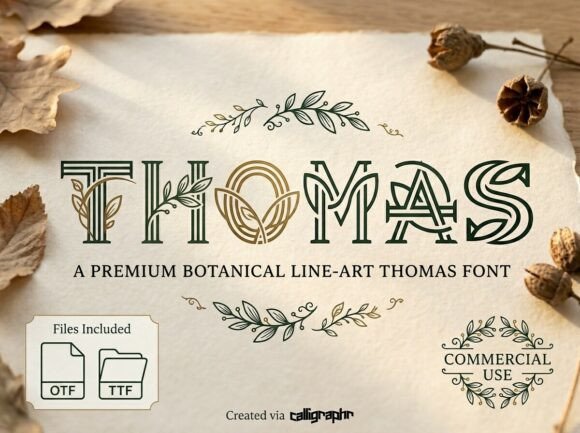
Imagine a typeface that captures the precision of architectural blueprints and the gentle, flowing lines of a botanical sketch. This is the essence of Thomas, a premium botanical line-art font designed for the modern era. It isn't just a collection of letters; it's a design system built on a multi-line structure, where each character is crafted with the clarity of geometry and the organic grace of natural stems and leaves. For anyone working on a project that demands a blend of innovation, transparency, and a touch of sustainable luxury, Thomas offers a unique and compelling visual language.
Who Might Find Thomas Essential?
The appeal of a typeface like Thomas is specific. It speaks directly to creators and professionals who want their work to communicate a particular set of values: modern sophistication, precision, and a deep connection to the natural world. Its strength lies in its ability to be both clean and complex, making it a powerful tool for specific types of projects.
For the Brand Strategist and Business Owner
If you are building a brand identity, the font you choose is a foundational decision. For entrepreneurs in the high-end skincare or clean beauty space, Thomas can instantly communicate a brand's commitment to transparency and botanical ingredients. The line-art quality suggests purity and careful formulation, while its architectural structure conveys scientific precision. Similarly, an architectural firm or an interior design studio focused on sustainable, biophilic design could use Thomas for its logo and key materials. It bridges the gap between the built environment and the natural one, perfectly aligning with a philosophy of thoughtful, integrated design.
For a small business owner creating a modern garden-to-table menu or a minimalist event stationery line, Thomas provides an elegant solution. It elevates a simple menu into a design piece, suggesting that the food is as carefully curated as the typography. The key here is commercial value; Thomas helps a business stand out by looking established, thoughtful, and premium from the very first glance.
For the Designer, Creator, and Hobbyist
Graphic designers and creators are always searching for typefaces that offer both beauty and flexibility. Thomas’s multi-line structure provides a unique textural quality that works beautifully for large headlines, logos, and monograms where the letterforms can be fully appreciated. A freelancer designing a presentation for a tech startup focused on sustainability could use Thomas for slide titles to add a sophisticated, organic touch without sacrificing clarity.
For the hobbyist—perhaps someone passionate about calligraphy, journaling, or creating personal art prints—Thomas offers a way to explore a modern, structured aesthetic. It’s different from traditional script fonts, providing a fresh source of creativity. While it has a learning curve to master its best applications, the learning value is in understanding how to balance such a distinctive font with simpler body text and imagery.
Evaluating Thomas for Your Project
Choosing a font involves weighing different priorities. Thomas excels in some areas and requires careful consideration in others. Understanding these trade-offs will help you decide if it's the right tool for your specific goal.
- Quality and Presentation: This is where Thomas truly shines. The craftsmanship in its line work and integrated foliage is exceptional. For projects where the visual impact of the headline or logo is paramount—such as a pitch deck for investors, a product launch website, or printed wedding invitations—its quality is undeniable. It delivers a high-end presentation.
- Ease of Use and Speed: Because of its intricate, multi-line nature, Thomas is not a "set it and forget it" body font. It is best used for display purposes where its details can be seen. A beginner might need to experiment to find the right size, color, and background to ensure readability. A marketer on a tight deadline might prefer a simpler sans-serif for large blocks of text, using Thomas strategically for a powerful title.
- Flexibility and Long-Term Use: Thomas is a specialist. Its strong personality makes it perfect for specific branding, but it may not be versatile enough for every project in your portfolio. A publisher would likely not use it for body text in a novel, but could absolutely use it for the cover design or chapter headings in a book on modern gardening or architecture. Its long-term usefulness depends on how often your work aligns with its organic-modernist aesthetic.
Practical Applications Across Different Fields
Let’s see how Thomas might be applied in real-world scenarios for different readers:
- An Educator creating materials for a course on sustainable design could use Thomas for the course title and section headers. It would visually reinforce the subject matter, making the learning experience more immersive and professionally polished.
- A Blogger focused on minimalist living and home decor could use Thomas for their blog’s masthead and post graphics. It would help establish a cohesive, sophisticated brand identity that resonates with their audience’s aesthetic preferences.
- A Consumer looking for a font for personal projects, like creating custom labels for homemade preserves or designing a family tree, would find Thomas adds a touch of elegance and modernity that standard fonts lack.
The decision to use Thomas ultimately comes down to alignment. If your project values geometric clarity paired with fluid, natural forms, and you are aiming for an audience that appreciates innovation and refined aesthetics, then Thomas is more than a font—it’s a statement. It helps brands and creators articulate a vision of modern sophistication where precision and nature coexist beautifully. For the right project, it is an indispensable asset that elevates the entire design.