Assertive Typography: Mastering Brand Identity with Belong Faith
In the crowded marketplace of digital assets and design resources, typography remains the silent ambassador of a brand's voice. While color palettes and imagery often capture initial attention, it is the lettering that dictates the tone, authority, and readability of a message. For designers seeking to project confidence without sacrificing elegance, the selection of a font is a strategic decision. Among the myriad of options available, Belong Faith has emerged as a typeface that bridges the gap between aggressive branding and refined detail. This article explores the utility of assertive typography, the technical advantages of PUA encoding, and the practical application of Belong Faith in modern design workflows.
The Anatomy of an Assertive Font
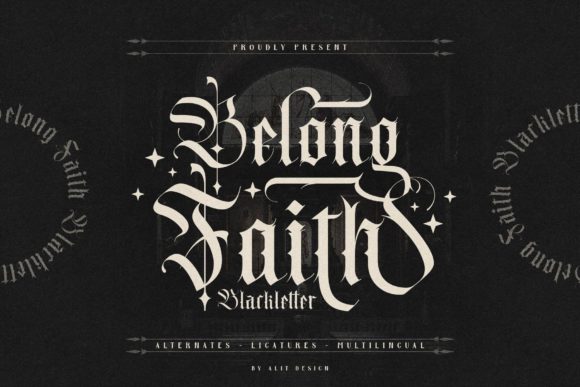
Typography is often categorized by mood: whimsical, professional, elegant, or aggressive. Belong Faith occupies a unique niche defined as "assertive." But what does this mean in practical terms for a designer or business owner? An assertive font commands attention through weight and structure rather than relying on erratic shapes or extreme slants. It suggests stability, reliability, and strength.
The design of Belong Faith is characterized by a bold silhouette. It carries a visual weight that allows it to anchor a layout immediately. However, the term "assertive" does not imply crudeness. The font features detailed construction, meaning the strokes, terminals, and curves are crafted with precision. This combination of weight and detail ensures that the text does not merely sit on the canvas but interacts with it dynamically. For a business owner, this translates to a brand identity that looks established and trustworthy. For a creator, it means a design that feels intentional and curated.
Technical Mastery: The Power of PUA Encoding
While aesthetic appeal is subjective, technical functionality is objective. One of the most significant features of Belong Faith is its PUA (Private Use Areas) encoding. For the uninitiated, this technical specification is a game-changer in design versatility.
Standard fonts are limited to the characters found on a standard keyboard—letters, numbers, and basic punctuation. PUA-encoded fonts, however, include a vast library of glyphs, swashes, ligatures, and stylistic alternates that are mapped to specific codes within the Unicode standard. This means that even if a standard text editor cannot access these characters, professional design software (like Adobe Illustrator, Photoshop, or InDesign) can.
Why PUA Encoding Matters
- Accessibility of Swashes: Swashes are the decorative extensions on letters. In non-PUA fonts, accessing these often requires complex kerning adjustments or separate "Swash" font files. With Belong Faith, these are accessible directly from the glyph panel.
- Software Compatibility: Because the characters are mapped to specific Unicode points, they are less likely to break or revert to a default font when moving files between different systems.
- Creative Freedom: Designers can mix and match standard letters with ornate alternates to create custom wordmarks that look entirely hand-lettered.
For the hobbyist or educator creating materials, this means you can achieve a high-end, custom look without the high-end price tag of commissioning a bespoke typeface.
Strategic Applications: From Labels to Logos
The prompt to "add it confidently to your label creation, branding, and similar designs" speaks to the versatility of Belong Faith. However, understanding where and how to apply an assertive font is crucial for effective design.
Product Labeling and Packaging
In the world of physical goods, shelf presence is everything. A consumer often decides on a product within seconds. Belong Faith is particularly effective for product categories that rely on heritage, strength, or luxury. Consider its application on:
- Craft Beverages: The bold nature of the font mimics the robust flavor profiles of craft beers or specialty coffees.
- Artisanal Goods: For handmade soaps, candles, or sauces, the detailed swashes suggest a "handcrafted" quality, while the bold weight ensures the brand name is legible from a distance.
- Men’s Grooming: The assertive style aligns well with products marketed as strong, durable, or refined.
Digital Branding and Web Design
On screen, Belong Faith serves best as a display font. Its detailed construction makes it excellent for hero sections, headers, and call-to-action buttons. However, because of its assertive nature, it should be paired carefully with body text. A clean, sans-serif font (like Open Sans or Roboto) usually provides the necessary contrast to ensure the page remains readable.
Merchandise and Apparel
T-shirt design and merchandise rely heavily on typography that stands out. The "bold touch" described in the font's characteristics makes it ideal for apparel. The ability to access swashes allows designers to create unique typographic art that flows with the shape of the garment, rather than looking like a rigid block of text.
Design Workflow: Integrating Belong Faith
Implementing a new font into an existing design system requires a methodical approach. Simply installing the file is not enough; one must understand how to manipulate the glyphs to achieve the desired effect.
Step 1: The Glyph Panel
Once Belong Faith is installed, the first stop should be the Glyphs panel in your design software. Do not settle for the default typing. Scroll through the available characters to view the alternates. You might find a lowercase "g" with a different loop or a capital "B" with a decorative serif. These small details are what separate amateur typography from professional design.
Step 2: Kerning and Tracking
Assertive fonts often have specific spacing requirements. Because Belong Faith is "strong and detailed," the characters may appear dense. Adjusting the tracking (the spacing between all characters) can help breathe life into the text. For headlines, tightening the kerning (spacing between specific pairs of letters) often creates a more cohesive, unified look.
Step 3: Contextual Alternates
Many modern fonts, including Belong Faith, support OpenType features. This allows the font to automatically swap characters based on their context. For example, typing "Th" might automatically trigger a ligature that connects the two letters beautifully. Ensuring these features are turned on in your design software is essential to utilizing the font's full potential.
Comparative Analysis: Assertive vs. Aggressive
It is important to distinguish between an "assertive" font and an "aggressive" one. Aggressive typography often features jagged edges, distressed textures, or extreme angles. While effective for certain niches (like heavy metal bands or extreme sports), it can alienate general audiences.
Belong Faith maintains a level of sophistication. The "bold touch" comes from the mass of the letterforms, not from visual noise. This makes it a safer choice for a broader audience, including educators creating engaging materials, researchers presenting data, or businesses looking to project stability. It asserts authority without shouting.
Considerations for Accessibility
While the aesthetic of Belong Faith is a major selling point, designers must remain vigilant regarding accessibility. Highly stylized fonts can sometimes pose challenges for readability, particularly for users with visual impairments or dyslexia.
- Contrast: Ensure there is sufficient contrast between the text color and the background. Bold fonts can sometimes bleed into dark backgrounds if the contrast ratio is too low.
- Size: Use Belong Faith at larger sizes. Its detailed construction is best appreciated when it has room to breathe. Using it for small body text (under 14px) may result in a loss of legibility.
- Alt Text: If using the font to create text-based graphics (like a logo image), always provide descriptive alt text for screen readers.
Real-World Relevance: Why Typography Trends Matter
Trends in design come and go, but the need for distinctiveness remains constant. Currently, there is a movement toward "maximalism" in design—moving away from the ultra-minimalist, thin-line aesthetics of the previous decade. Designers are seeking textures, weight, and personality.
Belong Faith fits perfectly into this current landscape. It offers the weight needed to stand out in a minimalist layout, but the detail required to satisfy the maximalist desire for intricacy. For business owners, adopting a font like this signals that the brand is current and attentive to design trends, yet timeless enough to avoid looking dated in a year.
Conclusion on Utility
The utility of a font extends beyond its visual appeal; it lies in its ability to solve communication problems. Belong Faith solves the problem of how to appear bold without being brash, and detailed without being cluttered. Its PUA encoding solves technical workflow problems, and its assertive style solves branding problems related to market positioning.
Whether you are a researcher designing a compelling report cover, a hobbyist crafting invitations, or a professional branding a new startup, the integration of an assertive typeface like Belong Faith is a strategic move. It provides the tools necessary to create designs that are not only seen but remembered. By leveraging its swashes, understanding its weight, and applying it with intention, creators can elevate their work from standard to exceptional.