Blood Throne: Harnessing Gothic Edge for Strategic Brand Dominance
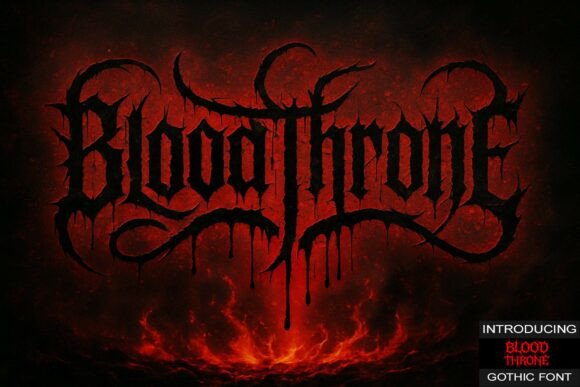
In the saturated landscape of modern digital marketing, the most dangerous strategy is often playing it safe. For brands aiming to disrupt markets rather than just participate in them, visual mediocrity is a silent killer. Blood Throne is not merely a typeface; it is a deliberate strategic asset designed for moments where subtlety fails and impact is non-negotiable. Inspired by the raw energy of the street and the intricate darkness of Gothic Chaos style, Blood Throne offers a visual language that commands attention, instills authority, and communicates a refusal to compromise. Understanding how to deploy this font effectively requires moving beyond aesthetic appreciation and into the realm of strategic planning and brand positioning.
Strategic Positioning and Market Disruption
For entrepreneurs and decision-makers, the choice of typography is a signaling mechanism. Standard sans-serifs suggest efficiency and modernity, while traditional serifs imply heritage and stability. Blood Throne, however, signals rebellion, authenticity, and high-octane energy. Utilizing this font is a strategic choice best suited for brands positioning themselves as disruptors or industry challengers. If your business model relies on challenging the status quo—whether in alternative fashion, extreme sports, underground music, or counter-culture media—integrating Blood Throne into your visual identity aligns your external presentation with your internal mission.
Consider the psychology of your target audience. Adults aged 20 to 50 who respond to this "wild and edgy" aesthetic are often looking for brands that reject corporate polish in favor of raw authenticity. By adopting Blood Throne, you are pre-qualifying your audience. It acts as a filter, repelling those seeking conventional solutions and magnetically attracting those who value individuality and intensity. This self-selection process is a powerful tool for community building, allowing you to foster a loyal base of followers who identify with the brand's rebellious spirit.
Operational Application: When to Deploy the Edge
While Blood Throne is visually arresting, strategic restraint is the key to its effectiveness. Using a high-impact font indiscriminately can dilute its power or, worse, render body copy illegible. The decision of where and how to use this typeface should be rooted in functionality and user experience goals.
High-Impact Scenarios
The primary utility of Blood Throne lies in high-stakes, short-form communication. It is engineered for headlines, hero images, and branding marks where immediate recognition is the goal. When planning your next digital campaign, consider deploying Blood Throne in the following contexts to maximize visual hierarchy:
- Logo Design: Creating a wordmark that stands out in a crowded marketplace.
- Event Promotion: Generating urgency and excitement for product drops, concerts, or limited-time offers.
- Social Media Hooks: Stopping the scroll on platforms like Instagram or TikTok with bold, unapologetic text overlays.
- Merchandise: Translating digital edge into physical products like apparel, stickers, or posters where the "street" aesthetic adds value.
Decision-Making Guidance: Context is King
Before relying on Blood Throne, conduct a context analysis. If your content requires detailed instruction, data-heavy reporting, or long-form reading, this font is the wrong tool. Its strength lies in its graphic weight, which can become a liability in dense paragraphs. A thoughtful practitioner pairs the chaos of Blood Throne with a clean, neutral secondary font. This contrast not only improves readability but also allows the edgy elements to pop without overwhelming the viewer. The goal is to use the font to create a visual hierarchy that guides the user’s eye to the most critical information first.
Creative Planning and Brand Cohesion
Implementing a font as distinct as Blood Throne requires a holistic approach to brand cohesion. It cannot exist in a vacuum; it must be supported by complementary design elements. When planning your visual assets, consider the ecosystem in which the font will live. The "Gothic Chaos" inspiration suggests a palette of deep blacks, stark whites, and perhaps violent accents like crimson or neon. However, strategic application means ensuring that this intensity serves a business objective.
For freelancers and agencies, presenting Blood Throne to clients requires framing it as a solution to a specific problem: invisibility. If a client’s current branding is failing to generate engagement or recall, introducing this font can be a tactical move to revitalize their image. It is a tool for rebranding efforts where the goal is to signal a shift in direction—a move away from the safe and toward the bold.
Risk Management: Avoiding the Pitfalls of "Edge"
Every powerful tool carries risk, and typography is no exception. The primary risk of using a font like Blood Throne without clear goals is the perception of inauthenticity. If a brand adopts a "wild" aesthetic purely for shock value without the substance to back it up, it can alienate potential customers and damage credibility. The font demands a certain level of brand confidence.
Furthermore, there are operational risks regarding accessibility. Highly stylized Gothic fonts can sometimes present challenges for users with visual impairments or dyslexia. A responsible decision-maker must balance aesthetic desires with inclusive design principles. This might mean using Blood Throne strictly for decorative headers while ensuring all functional text meets WCAG (Web Content Accessibility Guidelines) standards. Long-term results depend not just on looking cool, but on being usable and accessible to the widest possible relevant audience.
Long-Term Value and Audience Retention
Building a brand is a marathon, not a sprint. While Blood Throne is excellent for capturing attention, retaining that attention requires consistency. If you choose this font as your primary brand identifier, you are making a commitment to a specific tone of voice. Over time, your audience will associate the visual style of Blood Throne with the value you provide—whether that is entertainment, rebellion, or high-energy solutions.
For content creators and bloggers, this consistency builds recognition. When a follower sees a thumbnail or a header set in Blood Throne, they should immediately know it is your content. This reduces the cognitive load required to identify your brand in a noisy feed, thereby increasing engagement rates. It transforms the font from a mere design choice into a strategic trademark.
Practical Implementation for Maximum ROI
To get the most out of Blood Throne, treat it as a strategic reserve. Do not waste its impact on low-priority communications. Instead, reserve it for your most important calls to action, your biggest product launches, and your core brand identity. Experiment with scale; this font often gains power when enlarged, allowing the intricate details of the Gothic style to shine through.
For small business owners looking to stand out, Blood Throne offers a way to punch above your weight class. It allows you to project an image of confidence and distinctiveness that rivals larger, more established competitors. By integrating this font into your digital design strategy thoughtfully, you ensure that your visuals do not just decorate your content but actively work to achieve your business objectives. Use it to make a statement that your audience cannot ignore, and back that statement up with quality and substance.