Elemental Calligraphy: Bridging the Gap Between Traditional Elegance and Modern Design
In the realm of visual communication, the choice of typography is rarely just about legibility; it is about setting a mood, evoking an emotion, and telling a story before a single sentence is fully read. For designers, entrepreneurs, and creators seeking to infuse their projects with a sense of luxury and grace, the search for the perfect typeface often ends at the intersection of classic charm and contemporary refinement. This is the specific niche occupied by Elemental Calligraphy, a script font that has redefined what it means to be elegant in the digital age.
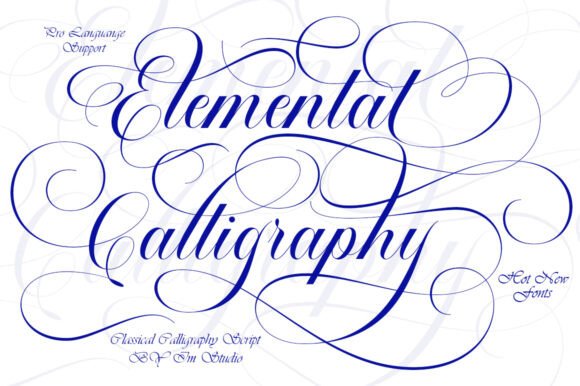
Unlike many typefaces that force a choice between the ornate complexity of the past and the clean functionality of the present, Elemental Calligraphy offers a harmonious blend of both. It draws inspiration from the rich history of copperplate calligraphy—a style known for its flowing, connected letters and thick-to-thin stroke contrast—but strips away the stuffiness often associated with traditional handwriting. The result is a typeface that feels alive, sensual, and approachable, yet undeniably sophisticated.
The Anatomy of Elegance: Defining the Aesthetic
To truly appreciate the utility of Elemental Calligraphy, one must look beyond its surface beauty and understand its underlying design philosophy. The font is characterized by what designers call "smooth, clean, feminine" attributes. This does not mean it is exclusively for women, but rather that it embraces a softness in its curves and a fluidity in its motion that appeals to a broad spectrum of aesthetic preferences.
The defining feature of this typeface is its meticulous detailing. Every curve and loop is crafted to mimic the natural flow of ink on paper, yet it avoids the illegibility often found in overly artistic scripts. The connections between letters are seamless, creating a rhythmic flow that guides the eye naturally from one word to the next. Furthermore, the inclusion of stylistic alternates allows users to customize the look of specific letters, ensuring that the typography feels unique and handcrafted rather than mass-produced.
Key Visual Characteristics
- Fluid Connectivity: The letters link together in a way that mimics natural handwriting, creating a cohesive visual block rather than disjointed symbols.
- Contrast and Balance: Like traditional calligraphy, it features varying stroke weights, adding depth and dimension to the text.
- Modern Refinement: While rooted in tradition, the letterforms are simplified enough to render beautifully on modern screens and high-speed printers.
Real-World Applications: Where Typography Meets Emotion
The true value of a typeface lies in its application. Elemental Calligraphy is not designed for body text in a technical manual; it is designed for moments that matter. Its versatility shines in scenarios where emotional connection and first impressions are paramount.
The Wedding and Stationery Industry
Perhaps the most natural home for Elemental Calligraphy is in the world of weddings and events. In this sector, the font does more than convey information—it sets the tone for the entire celebration. Imagine a save-the-date card where the names of the couple are rendered in this elegant script. The smooth curves suggest romance, while the clean legibility ensures that guests can easily read the details. It is equally effective on wedding invitations, menus for the reception, thank-you cards, and even signage for the venue.
Branding and Logo Design
For business owners, particularly those in the fashion, beauty, and luxury goods sectors, a logo is the face of the brand. Elemental Calligraphy offers a distinct advantage here. It communicates exclusivity and high quality without being aggressive. A bakery specializing in artisanal goods, a boutique clothing line, or a high-end salon can use this font to suggest that their products are crafted with care and attention to detail. The "sensual" and "effortlessly readable" nature of the font ensures that the brand appears welcoming yet premium.
Packaging and Product Design
In a crowded marketplace, packaging must catch the eye in a split second. Using Elemental Calligraphy on labels for beauty products, wine bottles, or gourmet foods can elevate the perceived value of the item. The font suggests that the contents inside are just as refined as the exterior design. It transforms a simple label into a promise of a luxury experience.
Practical Considerations for Designers and Creators
While the aesthetic appeal of Elemental Calligraphy is undeniable, practical application requires a nuanced understanding of its strengths and limitations. Choosing a font is a strategic decision that impacts readability, user experience, and brand perception.
The Strengths: Why Choose This Font?
The primary strength of this typeface is its balance of personality and clarity. Many calligraphic fonts suffer from being too "wild," with loops that extend too far or connections that break the visual rhythm. Elemental Calligraphy maintains a consistent baseline and predictable spacing, making it easier to work with in layout software. Its ability to function as a "display" font that remains readable makes it ideal for headlines, sub-headlines, and pull quotes.
- Versatility: It works across digital platforms (websites, social media graphics) and print media (business cards, posters).
- Professional Polish: It instantly adds a layer of sophistication that sans-serif fonts often lack.
- Emotional Resonance: It creates an immediate emotional connection with the viewer, which is crucial for marketing and storytelling.
The Considerations: When to Use Caution
It is equally important to recognize where Elemental Calligraphy might not be the best fit. As a script font, it is generally not recommended for large blocks of body text. Reading long paragraphs in a calligraphic style can cause eye strain due to the decorative nature of the letterforms. It is best used sparingly to maximize impact.
Additionally, context is key. Using this font for a children’s party invitation or a tech startup’s landing page might feel incongruous. The "luxury and grace" connotations work best when aligned with the brand's values. If a brand is aiming for a rugged, industrial, or hyper-casual vibe, this elegant script may send the wrong message.
Evaluating Suitability for Your Project
Before committing to Elemental Calligraphy for a new project, it is helpful to ask a series of evaluative questions. This process ensures that the font serves the project's goals rather than just satisfying a personal preference for the designer.
1. Who is the audience?
If the audience values tradition, sophistication, romance, or luxury, this font is a strong contender. If the audience is looking for efficiency, minimalism, or technical precision, a clean sans-serif might be more appropriate.
2. What is the medium?
Consider where the text will live. On a high-resolution print piece, the fine details of Elemental Calligraphy will shine. On a low-resolution mobile screen, very thin strokes might disappear. Always test the font at the size it will be displayed to ensure the "smooth, clean" features remain visible.
3. What is the hierarchy?
How will this font interact with other typefaces? Elemental Calligraphy pairs beautifully with simple sans-serifs (like Helvetica, Arial, or Montserrat) and clean serifs. The contrast between the ornate script and a plain companion font creates a dynamic visual hierarchy that is pleasing to the eye.
Conclusion: The Timeless Appeal of Refined Script
In an era dominated by flat design and geometric shapes, Elemental Calligraphy serves as a reminder of the beauty of the human touch. It is more than just a collection of vector points; it is a tool for storytelling. Whether you are a bride-to-be designing your dream invitations, a graphic designer crafting a logo for a new boutique, or a business owner looking to elevate your branding materials, this typeface offers a reliable path to elegance.
By blending the charm of classic copperplate with modern functionality, Elemental Calligraphy ensures that your message is not only seen but felt. It proves that in the world of design, sophistication and readability are not mutually exclusive—they are, in fact, the perfect pair.