Integrating Sarphine: A Practical Guide to Handwritten Elegance in Modern Design
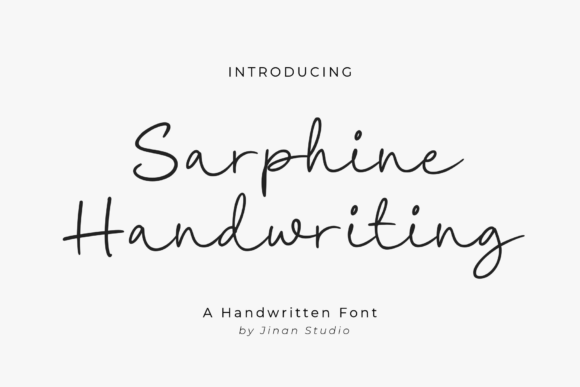
In the toolkit of a modern designer, marketer, or creative professional, typography is rarely a static choice. It is a strategic decision that influences the tone, readability, and emotional resonance of a project. While serif and sans-serif fonts often form the structural backbone of a layout, a distinct script font can provide the necessary counterpoint to create visual hierarchy and warmth. This is where Sarphine enters the workflow. As a sophisticated, handwriting-inspired typeface, Sarphine offers a blend of contemporary aesthetics and organic rhythm, making it a functional asset for specific stages of the creative process.
Understanding where a font like Sarphine fits into a broader production pipeline is essential for maintaining efficiency. It is not merely a decorative element; it is a communication tool designed to bridge the gap between professional polish and personal intimacy. By examining its application across various mediums—from logo design to social media graphics—we can develop a structured approach to implementing Sarphine effectively.
The Functional Role of Script Typography in Design Systems
Before integrating a specific font into a project, it is helpful to define its role within the design system. Sarphine is characterized by effortless curves and a natural flow. Unlike rigid geometric fonts, it mimics the inconsistencies of human touch. In a practical workflow, this typeface serves as the "accent" layer. It is rarely suitable for body copy due to legibility constraints at smaller sizes, but it excels in headers, pull quotes, and call-to-action elements where emotional engagement is the priority.
When planning a visual asset, consider the hierarchy of information. If the goal is to convey authority, a bold sans-serif might lead. However, if the goal is to convey approachability or creativity, Sarphine becomes the primary candidate. This decision-making process should occur early in the mood-boarding phase. By establishing early on that a project requires a "human touch," you can avoid the costly process of retrofitting typography later in the production cycle.
Preparation and Asset Management
Effective implementation begins with preparation. Before opening your design software, ensure that Sarphine is installed correctly across all workstations involved in the project. For agencies or teams, this means centralizing the font file in a shared asset library to prevent version control issues. A broken font link can disrupt a workflow just as easily as a missing image file.
Furthermore, explore the font’s full character set. High-quality fonts like Sarphine often include alternate swashes, ligatures, and stylistic sets. Familiarizing yourself with these features during the setup phase allows you to utilize them when you reach the refinement stage of a design, rather than discovering them by accident after the client has approved a layout.
Application in Brand Identity and Logo Creation
Logo design is one of the most high-stakes environments for typography. A logo must be scalable, memorable, and reflective of the brand's personality. Sarphine is particularly effective for brands that position themselves as artisanal, boutique, or service-oriented. Think of a wedding planner, a high-end bakery, or a wellness coach. In these contexts, the font does the heavy lifting of establishing a personal connection with the viewer.
When using Sarphine for a logo, the process should focus on customization. While the default letterforms are elegant, a logo often requires modification to ensure uniqueness. A practical workflow involves setting the wordmark in Sarphine and then converting the text to outlines. This allows you to manually adjust the kerning or extend the swashes to create a lockup that is truly unique to the client. This step is crucial for avoiding a "template" look, ensuring the final product feels bespoke rather than generic.
Streamlining Invitation and Stationery Workflows
The stationery sector—encompassing wedding invitations, event programs, and thank-you cards—relies heavily on the aesthetic qualities of script fonts. Here, Sarphine’s organic rhythm shines. However, the challenge in this workflow is balancing beauty with readability. A common pitfall is using a flowing script for essential information like dates, times, or addresses, which can frustrate the recipient.
A structured approach to designing invitations with Sarphine involves a pairing strategy. Use Sarphine exclusively for the main headline or the names of the hosts. For the logistical details, pair it with a clean, geometric sans-serif. This creates a visual flow that guides the eye: the user is drawn in by the elegance of Sarphine and then seamlessly transitions to the utility of the secondary font for information gathering. This method respects the user's need for clarity while maintaining the desired emotional tone.
Social Media Graphics and Digital Content
In the fast-paced environment of social media, stopping the scroll is the primary objective. Visuals need to communicate value instantly. Sarphine can be a powerful tool for creating "quotable art"—graphic images featuring inspiring text designed to be shared. These graphics often perform well because they offer value beyond a standard product photo.
When integrating Sarphine into social media templates, consider the background complexity. Because the font has intricate curves, it requires a clean background to remain legible. A practical tip is to use semi-transparent overlays or solid color blocks behind the text to ensure the letterforms do not get lost in a busy photograph. Additionally, because social media assets are often created in batches, setting up character styles in software like Canva or Adobe InDesign allows you to apply Sarphine consistently across dozens of posts, saving significant production time.
Product Packaging and Physical Application
For small business owners and product designers, packaging is the final physical touchpoint with the customer. Typography on packaging must communicate the product's nature instantly. Sarphine works exceptionally well for "flavor text" on packaging—descriptive phrases that evoke a sensory experience, such as "Hand-picked" or "Small batch."
However, the transition from screen to print requires a specific quality control step. Fonts that look delicate on a monitor can sometimes appear too thin or broken when printed on textured materials like kraft paper or cardboard. During the proofing stage, it is vital to test print Sarphine at the actual scale it will appear on the package. If the ink bleeds or the thin strokes disappear, you may need to adjust the tracking (letter spacing) or apply a slight stroke weight to ensure the typography remains robust and legible in the physical world.
Maintaining Consistency and Long-Term Usability
Consistency is the hallmark of professional design. Once you decide to use Sarphine for a specific project or brand, document its usage. Create a style guide that specifies which contexts are appropriate for the font. For example, you might dictate that Sarphine is used only for H2 headers and pull quotes, but never for navigation menus or legal disclaimers.
This documentation serves as a rulebook for anyone else working on the project, ensuring that the brand voice remains uniform whether the content is being produced by you, a freelancer, or an internal team member. Over the long term, this prevents "design drift," where assets slowly lose their cohesive look as different contributors make independent stylistic choices.
Conclusion: The Strategic Value of Intimacy
Ultimately, integrating a font like Sarphine is about more than just aesthetics; it is a strategic decision to humanize your digital presence. In an era dominated by clean, corporate, and sometimes sterile minimalism, the organic curves of a handwriting-inspired font offer a breath of fresh air. By following a structured process—planning for hierarchy, ensuring technical compatibility, pairing with utility fonts, and rigorously testing output—you can leverage Sarphine to create designs that are not only beautiful but also functionally effective and emotionally resonant.