Command the Focus: Integrating Bongstand into Your Design Workflow
In the landscape of digital design, the choice of typography is a foundational decision that dictates the tone, readability, and overall impact of a project. While many typefaces blend into the background, some are built to lead. The Bongstand font is engineered for this specific purpose. It is an energetic, handwritten typeface that blends casual, street-style aesthetics with the precision required for modern digital layouts. This article explores the practical application of Bongstand, detailing how to integrate this bold script into professional workflows, from initial planning to final asset management.
Understanding the Anatomy of Bongstand
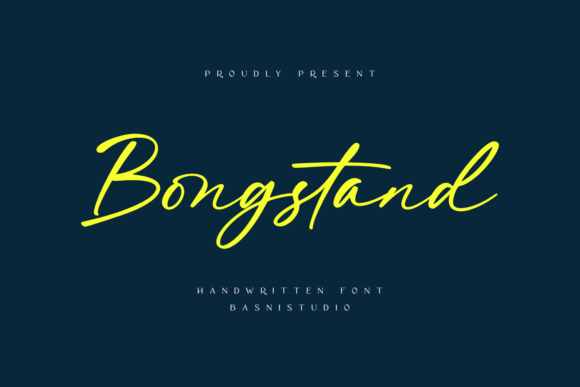
Before implementing any asset, it is crucial to understand its technical properties. Bongstand is not a standard script font; its defining characteristic is a consistent forward tilt and bold script anatomy. This creates a sense of momentum and urgency, making it ideal for active or high-energy contexts. The typeface features strong capital stems and a highly visible x-height, which contributes to its legibility even at smaller sizes.
A critical technical aspect of Bongstand is its crisp, fluid letter connections. In many handwritten fonts, connecting letters can result in jagged edges or awkward spacing. Bongstand solves this with smooth, heavy vector paths. This ensures that sentences maintain an uninterrupted visual current, which is essential for maintaining professionalism in logos and headers. For designers, this means less time spent manually adjusting kerning and ligatures.
Technical Specifications and File Preparation
When incorporating Bongstand into your digital asset library, preparation is key. The font is optimized with heavy vector paths, which makes it robust but also requires attention to file size in web applications. If you are using Bongstand for a website header or a landing page, ensure your web hosting environment can handle the load of a bold script font without causing significant latency.
Compatibility is another factor. Bongstand is designed to cut through deep solid colors, dark navy fields, or high-density background graphics. When setting up your color palettes, consider high-contrast pairings. Because the font has a strong visual presence, it pairs best with neutral, sans-serif body text. This creates a hierarchy where Bongstand commands attention for headlines, while the supporting text provides necessary information without visual competition.
Strategic Placement in the Design Process
Integrating a distinct typeface like Bongstand requires strategic planning. It should not be an afterthought added at the end of a project. Instead, consider it a core component of your mood boarding and conceptualization phase.
Phase 1: Conceptualization and Branding
For progressive tech startups or active lifestyle brands, the font selection often defines the brand voice. Bongstand offers an "athletic, confident signature look." During the initial branding phase, use Bongstand to mock up potential logos and wordmarks. Its casual street-style lettering works exceptionally well for brands that want to appear approachable yet authoritative.
When working with clients in the retro sports merchandise sector, present Bongstand as a solution for headers. Its visual rhythm mimics the energy of sports journalism or vintage athletics. By introducing the font early, you can build the rest of the visual identity—imagery, color schemes, and secondary typography—to complement its bold nature.
Phase 2: Execution and Layout
During the execution phase, efficiency is paramount. Because Bongstand is designed for "ultimate legibility," it reduces the need for constant zooming and checking. However, its bold nature requires careful management of white space.
- Header Hierarchy: Use Bongstand exclusively for H1 or H2 tags. Avoid using it for body copy, as the script style can become difficult to read in long paragraphs.
- Color Application: As noted, the font performs best against solid, dark backgrounds. When placing text over images, ensure the image has a dark overlay or the text is placed in a clear area to maintain the crispness of the vector paths.
- Social Media Marketing: For platforms like Instagram or TikTok, where attention spans are short, Bongstand is an effective tool for titles. Its "uninterrupted visual current" helps grab attention instantly as users scroll through feeds.
Workflow Integration and Tool Interaction
A font does not exist in a vacuum; it interacts with your broader software ecosystem. Whether you are using Adobe Creative Cloud, Figma, or Canva, managing the Bongstand font file is a standard process.
Managing Assets Across Platforms
For teams, consistency is the biggest challenge. When one designer uses Bongstand on a desktop application and another uses it on a web-based editor, discrepancies can occur. Establish a design system that includes the specific font weight and size settings for Bongstand.
Observation: Because Bongstand has a forward tilt, it can sometimes create alignment issues when placed next to rigid, geometric shapes. To mitigate this, use Bongstand as a standalone element or ensure that surrounding elements have enough padding to accommodate the italicized nature of the script.
Post-Production and Quality Control
After the design phase, quality control is necessary. When exporting files, particularly for print on merchandise like t-shirts or banners, the heavy vector paths of Bongstand translate well to high-resolution output. However, always check for aliasing (jagged edges) on lower-resolution screens.
- Check Legibility: Zoom out to 50% to ensure the text remains readable. The x-height tracking should keep the letters distinct even at a distance.
- Test on Mockups: Apply the text to 3D mockups (e.g., a hoodie or a tech device screen). The "digital layout rhythm" of the font should maintain its integrity on curved or textured surfaces.
- File Optimization: If the font is used in a web project, use modern formats like WOFF2 to ensure the heavy vectors are compressed efficiently without losing quality.
Long-Term Use and Versatility
The utility of a typeface is measured by its longevity. Bongstand is described as a "highly versatile and playful tool." This versatility allows it to be used across different campaigns without feeling repetitive.
For creative studio logotypes, Bongstand can serve as the primary wordmark. However, to keep the brand fresh over time, you can vary the supporting elements while keeping the Bongstand logo constant. For modern social media marketing titles, you can rotate Bongstand with other serif or sans-serif fonts depending on the campaign tone, though Bongstand should be reserved for the most high-energy calls to action.
Ultimately, Bongstand is more than just a collection of glyphs; it is a functional tool for directing user attention. By understanding its technical strengths—smooth vectors, high legibility, and bold anatomy—and integrating it thoughtfully into your workflow, you can ensure that your designs not only look energetic but also communicate your message with clarity and confidence. Whether you are a freelancer managing multiple clients or a small business owner defining your brand, Bongstand offers a reliable solution for commanding the focus of your design canvas.