Understanding the Visual Language of Romance in Typography
In the realm of visual communication, few elements carry as much emotional weight as typography. The selection of a typeface is rarely a neutral decision; it is a deliberate act of tone-setting that dictates how a message is received before a single word is read. Among the vast library of digital assets available to modern designers, the Dear Heart font stands as a specific study in sentimentality and aesthetic precision. It is not merely a collection of characters but a tool designed to evoke the intimacy of a handwritten note, bridging the gap between digital creation and personal touch.
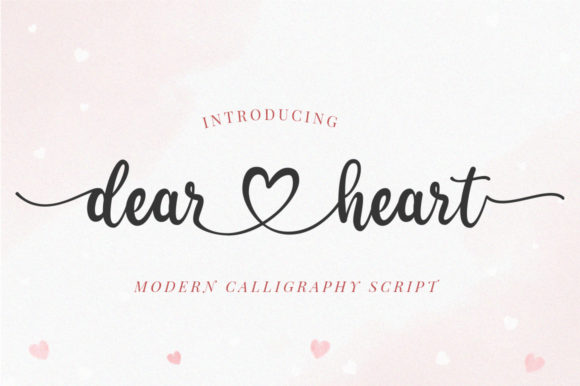
The Dear Heart typeface is classified as a romantic handwritten font, a category that has seen significant evolution in recent years. Historically, script fonts often suffered from poor legibility or a "computerized" feel that failed to capture the organic irregularities of human handwriting. However, modern type design, exemplified by Dear Heart, utilizes advanced vector technology to create fluid, natural strokes. The design prioritizes the flow of cursive letterforms, ensuring that the connection between letters feels authentic rather than forced. This attention to detail makes it a versatile asset for a wide range of professional and personal applications.
The Anatomy of the Script: Design Characteristics
To truly appreciate the utility of Dear Heart, one must examine its structural characteristics. The font exhibits a distinct baseline variation typical of high-quality handwriting fonts. Rather than adhering to a rigid mathematical grid, the letters possess a subtle bounce and flow that mimics the instability of ink on paper. This organic quality is essential for designs aiming to appear personal or intimate.
Furthermore, the weight and contrast of the strokes play a crucial role. Dear Heart features varying line thicknesses, a characteristic known as contrast, which is derived from the pressure applied to a calligraphy pen. This dynamic range adds depth to the text, preventing it from looking flat when rendered on a screen or printed material. The inclusion of decorative elements, such as swashes and tails on ascending and descending letters, allows for significant customization. These flourishes are not merely ornamental; they serve to frame the text and create a focal point, particularly in headers or monograms.
Technical Specifications: The Role of PUA Encoding
While the aesthetic appeal of Dear Heart is immediately apparent, its technical architecture is equally important for professional workflows. A key feature of this font is its PUA (Private Use Areas) encoding. For the uninitiated, PUA encoding refers to the method by which special characters are stored within the font file. Standard fonts map characters to specific keys on a keyboard. However, complex script fonts often contain hundreds of extra glyphs, alternate characters, and ligatures that do not have a dedicated key.
Without PUA encoding, accessing these special features often requires advanced design software with OpenType support, such as Adobe Illustrator or InDesign, which can automatically substitute alternate characters based on context. However, the PUA encoding of Dear Heart means that all glyphs and swashes are mapped to the Private Use Area of the Unicode standard. This allows users to access every decorative element even in basic text editors or design platforms that lack advanced OpenType feature support. This technical consideration is vital for educators, hobbyists, and business owners who may be using a variety of software environments, from Canva to Microsoft Word, ensuring that the full capability of the font is accessible to everyone.
Visual Storytelling in Event Stationery
The primary application for a font like Dear Heart is often found in the world of event stationery, specifically within the context of weddings and celebrations. The "save the date" card, the invitation suite, and the day-of signage all require a cohesive visual language that communicates elegance and joy.
When designing a wedding invitation, for instance, the hierarchy of information is critical. The names of the couple are the focal point. Using Dear Heart for these names creates an immediate emotional connection, suggesting that the invitation is a personal letter rather than a mass-produced flyer. The font’s swashes can be utilized to underline names or create decorative borders around the date and location. However, designers must exercise restraint. Pairing Dear Heart with a clean, sans-serif or serif body font is essential to ensure that the logistical details (time, address, RSVP information) remain legible. The romantic script serves as the headline, while the supporting typeface provides the necessary clarity for the reader.
Digital Applications and User Interface Design
Beyond the physical paper, the digital landscape offers fertile ground for romantic typography. In the age of social media and digital marketing, brands are constantly seeking ways to humanize their interactions. Dear Heart finds a natural home in the digital sphere, particularly in content creation for platforms like Instagram, Pinterest, and Etsy.
For small business owners selling handmade goods or artisanal products, the logo and branding materials convey the nature of the product. A bakery, a florist, or a jewelry maker might utilize Dear Heart to suggest that their products are crafted with love and attention. The font can be used in digital mockups, email headers, or website hero images to evoke a specific mood. Moreover, in the realm of digital planners and templates, hobbyists often seek out PUA-encoded fonts to create custom stickers and headers for their digital journals, allowing for a personalized organizational system that feels as tactile as a physical notebook.
Educational and Instructional Contexts
The utility of Dear Heart extends into educational materials, particularly those designed for younger audiences or for subjects that require a softer approach. Teachers creating certificates of achievement, classroom decor, or reading logs often look for fonts that are engaging yet readable. While Dear Heart is primarily a display font, its distinct style makes it useful for highlighting key vocabulary words or creating headers for bulletin boards.
In the context of teaching cursive writing or calligraphy, fonts like Dear Heart serve as visual references. Students can study the letterforms to understand the connection between strokes. However, educators should note that while the font is legible, it is highly stylized. It is best used for titles and headers rather than body text, ensuring that the content remains accessible to readers of all literacy levels.
Compatibility and Workflow Integration
For professionals, the integration of a new asset into an existing workflow must be seamless. Dear Heart is designed to be compatible with a wide array of operating systems and software. Whether one is working on a macOS environment using the Font Book or a Windows system using the Control Panel, installation is typically straightforward. Once installed, the font appears in the font selection menu of any application that utilizes system fonts.
The practical advantage of the PUA encoding becomes most evident during the design process. A graphic designer working on a logo might want to add a specific swash to the tail of a letter "y" or "g." In a standard OpenType font, this might require navigating complex glyph panels. With Dear Heart, the user can simply copy and paste the desired character from a character map, streamlining the creative process. This accessibility ensures that the font is not just a tool for experts but a resource for anyone with a creative idea.
Color Theory and Material Pairing
The choice of typography does not exist in a vacuum; it interacts with color, texture, and material. The romantic aesthetic of Dear Heart pairs exceptionally well with specific color palettes and textures. Soft pastels, such as blush pinks, sage greens, and dusty blues, complement the delicate nature of the script. Conversely, using the font in a deep burgundy or gold foil against a dark background can create a sense of luxury and sophistication.
When considering physical printing, the texture of the paper influences how the font is perceived. A rough, cotton fiber paper softens the edges of the letters, enhancing the handmade feel. A smooth, glossy card stock, on the other hand, sharpens the contrast of the strokes, making the font appear more modern and precise. Understanding these interactions allows designers to make informed decisions that elevate the final product, ensuring that the typography works in harmony with the physical medium.
Considerations for Accessibility and Readability
While the aesthetic qualities of Dear Heart are its primary selling point, it is important to address the topic of accessibility. In web design and digital communication, readability is paramount. Decorative script fonts can pose challenges for users with visual impairments or dyslexia. The flowing connections and ornate swashes can sometimes obscure the distinct shapes of individual letters.
Therefore, when utilizing Dear Heart in a professional context, it is advisable to adhere to best practices regarding contrast and sizing. The font should be used at a size large enough to maintain the integrity of the letterforms. Furthermore, it should rarely be used for long blocks of text. Its strength lies in its ability to capture attention in short bursts—headlines, logos, and pull quotes. By reserving Dear Heart for these specific elements and pairing it with a highly legible sans-serif for body text, designers can maintain an inclusive user experience without sacrificing the romantic aesthetic.
The Evolution of Handwritten Styles in the Digital Age
The prevalence of fonts like Dear Heart reflects a broader trend in design: the quest for authenticity. In an era dominated by screens and vectors, there is a growing desire to reintroduce the "human element" into digital artifacts. Handwritten fonts serve as a proxy for the personal touch that is often lost in electronic communication.
Historically, calligraphy was a specialized skill requiring years of practice and expensive tools. Today, type designers digitize these historical forms, making them accessible to the masses. Dear Heart represents the democratization of this art form. It allows a small business owner with no calligraphy training to create a logo that looks bespoke and artisanal. It allows a teacher to create a classroom environment that feels warm and inviting. It allows a partner to create a digital invitation that feels as tender as a handwritten letter.
This shift towards romantic typography is not merely a fleeting trend; it is a response to the cold precision of algorithmic design. By incorporating fonts that simulate the imperfections and flow of the human hand, creators can foster a stronger emotional connection with their audience. Dear Heart, with its specific blend of elegance, accessibility, and technical robustness, stands as a prime example of how typography continues to evolve to meet the emotional needs of its users.